


Introduction
Access to clean, safe water matters more than ever. Contaminated or mineral-heavy water can affect health, damage appliances and disrupt production in industrial settings. Reverse osmosis (RO) has become one of the most trusted ways to deliver consistently high-quality water.
RO is a purification process that pushes water through a semi-permeable membrane under pressure. The membrane rejects dissolved salts, chlorine, heavy metals and many microorganisms, and lets clean water pass. The result is fresh-tasting water for drinking, cooking and industrial use.
In the UAE, where most supply is desalinated and often stored before use, RO helps maintain consistent purity at the point where water is actually consumed. This guide explains how RO works, what is inside an RO system, where it is used, how long membranes last and how to choose the right setup. If you need a specific configuration, browse our RO systems or contact us for a recommendation.
What Is Reverse Osmosis?
In natural osmosis, water moves through a membrane from a low-salt solution toward a high-salt solution. Reverse osmosis forces water the opposite way. A pump applies pressure higher than the water’s osmotic pressure, so water molecules cross the membrane while dissolved salts and most contaminants are held back.
The process splits the feed into two streams:
- Permeate: the purified water you use.
- Concentrate (reject): the stream that carries the rejected salts and impurities to drain or to a reuse point.
The heart of every system is the RO membrane. For a closer look at the element itself, read What Is an RO Membrane and How Does It Work?
Why Reverse Osmosis Matters in the UAE
UAE water comes largely from desalination plants. The supply is treated to official standards, but it can still carry dissolved minerals, residual chlorine and taste issues, and it may pick up contamination in tanks and pipes after delivery. RO is not a luxury upgrade. It is a practical way to keep water quality consistent across homes and industries.
A properly specified RO system delivers:
- A high rejection of dissolved solids and many contaminants
- Fresh, great-tasting drinking and cooking water
- Protection for appliances from scale and mineral deposits
- Consistent water for food, coffee and sanitation in commercial kitchens
- Process stability in precision industrial operations
- Less reliance on bottled water and plastic waste
From kitchen taps and restaurants to pharmaceutical plants, food processing and laboratories, RO supports purity where mineral load and microscopic impurities cannot be left to chance. For the wider health picture, see How Clean Water Impacts Health, Lifestyle, and Industry.
What Does Reverse Osmosis Remove?
A well-designed RO system removes or greatly reduces:
- Dissolved salts and total dissolved solids (TDS)
- Chlorine and chloramine (with carbon pre-treatment)
- Heavy metals such as lead, arsenic and mercury
- Nitrates, sulphates and fluoride
- Organic compounds and many pesticides
- Bacteria and many viruses, although RO should not be the only disinfection barrier
RO does not remove everything equally. Dissolved gases such as carbon dioxide pass more easily, and it is not a substitute for disinfection. Many systems pair RO with UV disinfection for a final microbial barrier.
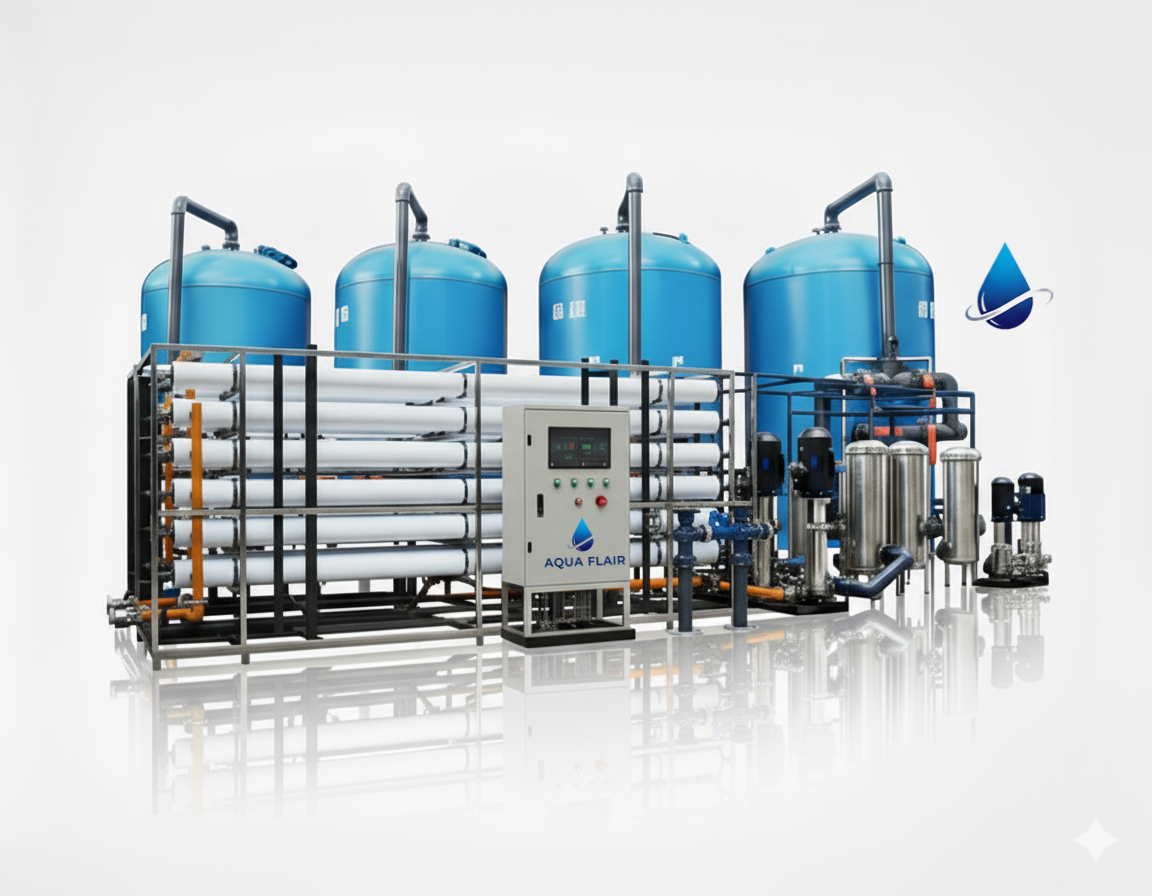
Inside an RO System: The Stages
Most systems are multi-stage trains. Each stage protects the next.
| Stage | What it does |
|---|---|
| Sediment pre-filter | Removes sand, rust and particles using bag filters or cartridge filters |
| Activated carbon | Removes chlorine, odour and organics using filtration media |
| Antiscalant dosing | Prevents mineral scale on the membrane with dosing pumps |
| High-pressure pump | Raises pressure above the osmotic pressure |
| RO membrane | The separation stage, held in RO pressure vessels |
| Post-treatment | Polishes taste, adjusts pH, remineralises or disinfects |
Larger plants use media filters in corrosion-resistant FRP vessels with Clack valves to automate backwash. To see how every stage fits into a full plant, read How Water Treatment Systems Work.
Types of RO Systems
| Type | Typical use |
|---|---|
| Residential under-sink | Kitchen drinking and cooking water |
| Commercial | Restaurants, cafes, hotels, clinics and laboratories |
| Industrial brackish-water RO | Boiler feed, process water and food and beverage plants |
| Seawater RO | Coastal desalination and high-salinity feed |
Brackish-water systems run at moderate pressure, while seawater systems need much higher pressure. Capacity, recovery rate and the membrane class should be chosen from a water analysis, not from a catalogue alone.
How Long Do RO Membranes Last?
With proper pretreatment and maintenance, industrial RO membranes typically last three to five years. Smaller domestic systems often see shorter cycles depending on water conditions and usage. Life depends on feed quality, pretreatment, operating pressure, cleaning habits and how consistently the whole train is serviced.
Aqua Flair Trading LLC supplies RO systems and membranes including FilmTec, Hydranautics and LG elements, selected for UAE water conditions across residential, commercial and industrial duties. For a buyer’s comparison, read Wholesale RO Membranes in UAE, and browse the full RO membrane range.
5 Signs Your RO System Needs Attention
1. Chemical aftertaste or dull flavour
RO water should taste crisp and clean. A persistent chemical aftertaste suggests the carbon, membrane or post-filter stages are no longer doing their job.
2. Scale building up on appliances
RO water helps prevent scale on coffee machines, kettles and washing machines. Returning scale is a practical sign that dissolved minerals are no longer being controlled.
3. Weak contaminant removal
Rising TDS or conductivity in the product water means the membrane or upstream stages need review. A handheld TDS meter or water quality meters make the trend visible.
4. Pre-filtration is overloaded
Sediment and carbon stages protect the membrane. If they are exhausted, dirt and chlorine reach the element and cut both rejection and life.
5. Membrane ageing past its expected life
Even with good care, membranes eventually need replacement. Running well past that point without performance checks risks purity and reliability. Our guide Signs Your RO Membrane Needs Replacement explains the warning signs in detail.
What Maintenance Can Restore, and What It Cannot
RO performance depends on the whole multi-stage process. Maintenance and membrane replacement solve many issues, but they cannot replace correct system design.
Maintenance and service can address
- Worn sediment and carbon pre-filters
- Membranes due for replacement
- Post-filter polish stages that restore taste
- Routine installation and after-sales checks
Service alone cannot fix
- A membrane class unsuited to the duty
- UAE feed-water challenges ignored in system selection
- A design that does not reflect the real water analysis
- Expecting non-RO filters to remove dissolved salts
Getting More Life Out of Your RO System
- Keep pre-filtration healthy so sediment, dirt and chlorine never reach the membrane.
- Protect the membrane stage, because it carries the separation duty.
- Use post-filtration for taste so finished water stays fresh.
- Match the membrane to the duty, whether a compact domestic element or a high-rejection industrial element. For selection and care, see our Complete Guide to RO Membranes.
- Monitor performance. A flow meter and regular TDS checks catch decline early.
- Plan replacement with support so elements and installation keep the system on specification.
Customised RO systems built on an analysed water sample, with installation and after-sales support, perform best in the UAE’s demanding conditions. Learn more about Aqua Flair.
Frequently Asked Questions
Why is RO preferred over other filtration methods?
RO removes dissolved salts and microscopic impurities that ordinary filters cannot. That is why it is the core of most high-purity systems.
How long do RO membranes last?
With proper maintenance, industrial membranes typically last three to five years, depending on water conditions. Small domestic systems may need earlier replacement.
Is RO water safe for daily consumption?
Yes. RO water is clean and suitable for regular use by adults and children. Many systems add a remineralisation or polishing stage to improve taste.
Does RO waste water?
RO sends a portion of the feed to drain as concentrate. Well-designed systems with a suitable recovery rate keep this to a minimum, and industrial users can often reuse the reject for non-critical duties. Read Water Scarcity: A Growing Challenge for more on efficient water use.
Can Aqua Flair provide replacement membranes?
Yes. As an RO membrane supplier in the UAE, Aqua Flair offers replacement membranes and installation support.
Which RO membrane brand is best for industrial use?
It depends on the feed water, required rejection and budget. Hydranautics, FilmTec and LG all offer industrial ranges. Share your water analysis and we will recommend a suitable element.
Conclusion
Reverse osmosis remains one of the most reliable and efficient water purification methods available, whether the goal is family drinking water or tight standards for business and industry. Results depend on the whole system: sound pretreatment, the right membrane, regular monitoring and timely service.
Aqua Flair Trading LLC supplies RO systems and membranes with professional expertise and service for residential, commercial and industrial clients. To discuss your requirement, request a quote and browse everything we supply on our products page. For tips on using water well after treating it, read Water Conservation: Why Every Drop Counts.
Share this story


