The Complete Guide to RO Membranes for Industrial Water Treatment Systems
Water is at the core of almost every industrial process, and the quality of that water directly affects product quality, equipment life, and operational costs. For industries that cannot afford to compromise on water purity, reverse osmosis (RO) membranes are the technology of choice.
RO membranes are the central separation element in modern water treatment systems, capable of removing dissolved salts, heavy metals, bacteria, viruses, and chemical contaminants from water with a high degree of reliability. They are used across a vast range of industries from pharmaceutical manufacturing and food processing to seawater desalination and municipal water supply.
But selecting the right membrane, maintaining it correctly, and understanding what affects its performance are not always straightforward decisions. This guide covers all of it in one place.
Whether you are evaluating membranes for a new system, troubleshooting performance issues, or planning a replacement, you will find practical, accurate information here to support your decision-making.
Table of Contents
- What Is a RO Membrane?
- How Does a RO Membrane Work?
- Key Benefits of RO Membranes
- Main Components of an RO System
- Types of RO Membranes
- Common Membrane Materials
- Standard RO Membrane Sizes
- Industrial Applications of RO Membranes
- Factors Affecting RO Membrane Performance
- Common Causes of Membrane Fouling
- Signs Your RO Membrane Needs Replacement
- RO Membrane Cleaning and Maintenance
- How to Extend RO Membrane Life
- Popular RO Membrane Brands
- How to Choose the Right RO Membrane
- Why Choose Aqua Flair for RO Membranes in the UAE and GCC?
- Frequently Asked Questions
- Conclusion
What Is a RO Membrane?
An RO membrane is a semi-permeable barrier used in reverse osmosis systems to separate dissolved salts, contaminants, bacteria, and other impurities from water. Under applied pressure, water molecules pass through the membrane while most dissolved solids and contaminants are rejected and discharged as concentrate water.
The result is a reliable, continuous supply of high-purity water suitable for demanding industrial and commercial applications.
RO membranes are used across a wide range of sectors, including:
- Industrial water treatment plants
- Commercial water purification systems
- Seawater desalination plants
- Food and beverage production facilities
- Pharmaceutical manufacturing
- Hotels, hospitals, and large commercial buildings
- Manufacturing and processing industries
Related Article: What Is an RO Membrane?
How Does a RO Membrane Work?
Reverse osmosis works by applying pressure to feed water the raw incoming water and forcing it through a semi-permeable membrane. The membrane allows water molecules to pass through while blocking dissolved salts, contaminants, and microorganisms.
This separation process produces two distinct water streams:
Permeate Water
The purified water that passes through the membrane. This is the treated output used in your process or application.
Concentrate Water (Reject Stream)
The water that does not pass through the membrane. It carries the rejected contaminants and dissolved salts and is discharged from the system.
A properly specified and maintained RO membrane can remove:
- Dissolved salt and minerals
- Heavy metals including lead, arsenic, mercury, and chromium
- Organic chemical compounds
- Bacteria and microorganisms
- Viruses
- Suspended particles and sediment

Key Benefits of RO Membranes
Industrial-grade RO membranes offer a range of practical advantages that make them the preferred water purification technology across many sectors.
High Salt Rejection
Modern TFC RO membranes achieve salt rejection rates of 96% to over 99.7%, making them effective for even highly contaminated feed water sources.
Consistent Water Quality
RO systems deliver stable permeate quality over extended periods, provided operating conditions provided and maintenance are properly managed.
Lower Long-Term Operating Costs
The right industrial RO membrane, combined with effective pretreatment and scheduled maintenance, reduces chemical consumption, energy use, and unplanned downtime.
Broad Application Range
From brackish water treatment and seawater desalination to pharmaceutical-grade water production, RO membranes adapt to a wide variety of industrial requirements.
Reduced Environmental Impact
RO systems minimize the need for chemical-intensive treatment processes and can be designed to optimize water recovery, reducing overall wastewater discharge.
Main Components of a RO System
A RO membrane operates as part of a complete system. Each component plays a defined role in maintaining consistent performance and protecting the membrane from premature damage.
Pretreatment Filters
Remove sediment, chlorine, and other substances that could foul or chemically damage the membrane before feed water reaches it. Effective RO pretreatment is one of the most significant factors in membrane longevity and is often underinvested during system design.
High-Pressure Pump
Generates the operating pressure required to force water through the membrane. Pump selection depends on the membrane type, feed water salinity, and required flow rate.
RO Membrane
The core separation element that removes dissolved contaminants from the feed water stream.
Pressure Vessel
A cylindrical housing that holds one or more membrane elements in place under operating pressure. Pressure Vessels must be rated to withstand the system’s maximum operating pressure.
Flow Meters
Monitor the flow rates of the feed, permeate, and concentrate streams continuously. Changes in these readings are often the first indication of membrane fouling or system issues.
Post-Treatment Equipment
Adjust the quality of the permeate after it exits the membrane for example, demineralizing purified water for drinking applications or fine-tuning pH for process requirements.
Types of RO Membranes
Membrane selection begins with identifying your feed water source and its salinity. The two primary categories of industrial RO membranes are brackish water membranes and seawater membranes.
Brackish Water Membranes (BW)
Brackish water RO membranes are designed for feed water with low to moderate salt concentrations, typically below 10,000 mg/L TDS (total dissolved solids). They are the standard choice for:
- Municipal tap water and groundwater
- Well water and borehole supplies
- Industrial process water
These membranes operate at lower pressures, which reduces energy consumption and makes them more cost-effective for most commercial and industrial water treatment applications.
Seawater Membranes (SW)
Seawater RO membranes are engineered for high-salinity feed water, such as ocean water where TDS levels commonly exceed 35,000 mg/L. Primary applications include:
- Coastal and offshore desalination plants
- High-salinity industrial water treatment systems
Seawater membranes require significantly higher operating pressures but deliver salt rejection rates above 99.7%, meeting the most demanding purification requirements.
BW vs SW RO Membrane Comparison
| Feature | BW Membranes | SW Membranes |
| Feed Water | Brackish / Municipal / Groundwater | Seawater / High-Salinity Water |
| Operating Pressure | Lower (5–20 bar) | Higher (55–70 bar) |
| Salt Rejection | High (96–99%) | Very High (99.3–99.8%) |
| Typical Application | Industrial & Commercial Systems | Desalination Plants |
| Energy Requirement | Lower | Higher |
Related Article: BW vs SW RO Membranes — What’s the Difference?
Common Membrane Materials
The material composition of a membrane directly determines its salt rejection capability, chemical resistance, and operational lifespan. Two materials account for most of the industrial membrane production.
Thin Film Composite (TFC) Membranes
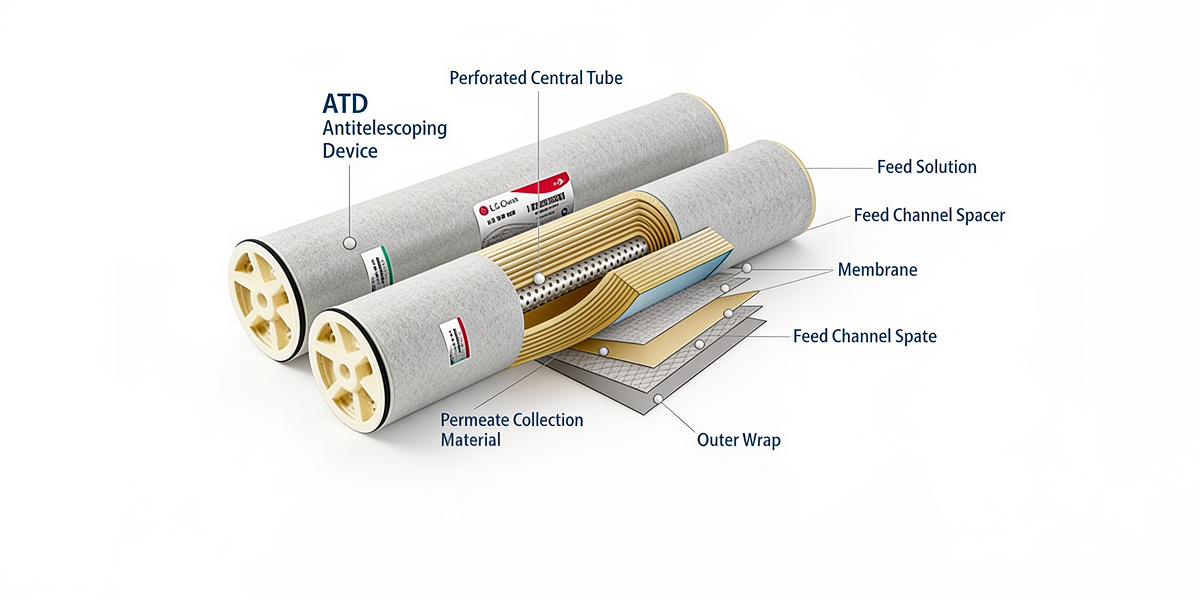
TFC membranes are the industry standard for modern industrial and commercial water treatment. They are constructed from multiple distinct layers typically a polyester support, a microporous polysulfide layer, and an ultra-thin polyamide barrier each engineered for a specific role.
Key performance characteristics:
- Salt rejection: 96–99.7% depending on membrane specification
- Chemical compatibility: Broad resistance to a range of industrial chemicals
- Service life: Superior long-term durability under stable operating conditions
- Permeate flow: Higher output per unit membrane area compared to CA membranes
Critical limitations:
TFC membranes are sensitive to free chlorine. Even brief exposure to chlorinated water can cause irreversible damage to the polyamide layer. Feed water must be fully dechlorinated using activated carbon filtration or sodium metabisulfite dosing before reaching a TFC membrane.
Cellulose Acetate (CA) Membranes
Cellulose acetate membranes are an earlier-generation technology that remains in limited use. Their primary advantage is chlorine tolerance they can withstand small concentrations of free chlorine in the feed water without degradation.
However, CA membranes have meaningful limitations compared to TFC membranes:
- Lower salt rejection rates
- Shorter operational lifespan
- Susceptibility to biological degradation at certain pH levels
For most modern industrial RO systems, TFC membranes are the preferred choice. CA membranes may be considered where chlorine removal in pretreatment is not feasible.
Standard RO Membrane Sizes
Industrial RO membranes are produced in standardized dimensions to ensure compatibility across different system configurations and manufacturers.
4040 Membranes (4″ × 40″)
Used in smaller commercial systems including restaurants, hotels, light industrial applications, and point-of-use purification units. They offer a compact footprint with reliable performance for lower-flow applications.
8040 Membranes (8″ × 40″)
The standard size for large-scale industrial reverse osmosis systems. They deliver significantly higher permeate flow rates and are used in manufacturing facilities, desalination plants, hospitals, and municipal water treatment systems.
Specialty Membrane Sizes
Certain applications require custom membrane configurations outside standard dimensions. These are available from most major manufacturers and are typically specified at the system design stage.
Membrane size selection depends on required permeate flow rate, feed water quality, system pressure rating, and available installation space.
Industrial Applications of RO Membranes
Reverse osmosis membranes serve critical functions across a broad range of industries. In each case, the common requirement is access to consistently high-quality water that standard filtration cannot reliably deliver.
Food and Beverage Industry
RO systems produce processed water and ingredient water that meets strict purity and regulatory standards. Applications range from beverage production and dairy processing to concentrated juice and packaged water manufacturing.
Pharmaceutical Industry:
Pharmaceutical-grade RO membranes produce purified water (PW) and water for injection (WFI) that meets regulatory standards including USP, EP, and WHO guidelines. Water quality consistency is a non-negotiable requirement in this sector.
Hotels and Hospitality
Hotels, resorts, and large commercial buildings use RO water treatment systems to supply high-quality water for drinking, food preparation, laundry, and HVAC applications improving guest experience and reducing equipment maintenance costs.
Manufacturing Plants
Industrial RO membranes treat boiler feed water, cooling tower makeup water, and general process water across automotive, electronics, textile, and chemical manufacturing sectors. Reducing dissolved solids in these applications extends equipment life and reduces chemical treatment costs.
Municipal Water Treatment:
Water utilities rely on RO systems to deliver safe drinking water, particularly in regions where groundwater salinity or contamination levels exceed acceptable limits.
Seawater Desalination Plants:
Large-scale seawater desalination is one of the most significant applications of RO technology globally. In water-scarce regions including the UAE and GCC desalination plants equipped with seawater RO membranes provide the primary source of potable water for communities and industries alike.
Factors Affecting RO Membrane Performance:
A high-quality membrane will underperform if operating conditions fall outside the design envelope. The following factors have the most direct impact on RO membrane efficiency and service life.
Feeding Water Quality:
Poor feed water quality is the leading cause of premature membrane fouling. Elevated levels of suspended solids, organic matter, hardness minerals, or biological activity in the feed accelerate fouling and reduce membrane output. A thorough feed water analysis before system design is essential.
Operating Pressure:
Each membrane type has an optimal pressure range. Operating below this range reduces permeate production and system efficiency. Operating too far above the rated pressure can cause physical damage to the membrane over time.
Water Temperature:
Membrane permeability increases with water temperature. Warmer feed water flows through the membrane more easily, while colder water requires higher pressure to maintain equivalent output. Most membrane performance specifications are rated at 25°C (77°F) as a reference point.
Recovery Rate:
Recovery rate is the percentage of feed water converted into permeate. Setting recovery too high concentrates dissolved solids in the system, increasing the risk of scaling on the membrane surface. Recovery targets must be matched by feeding water chemistry.
Pretreatment Efficiency:
Effective RO pretreatment is the single most impactful factor in protecting membrane performance. Properly pretreated water reduces fouling rates, extends cleaning intervals, and significantly increases RO membrane life.
Common Causes of Membrane Fouling
Membrane fouling is the gradual accumulation of material on or within the membrane surface. It is one of the most common operational challenges in industrial RO systems and the primary cause of reduced performance over time.
Understanding the type of fouling affecting your system is essential for selecting the correct cleaning approach and preventing recurrence.
Scaling
Mineral salts most commonly calcium carbonate, calcium sulfate, barium sulfate, and silica precipitate out of solution and form deposits on the membrane surface. RO membrane scaling is most common when recovery rates are set too high or when antiscalant dosing is insufficient for feed water chemistry.
Biological Fouling (Biofouling):
Bacteria and other microorganisms colonize the membrane surface and form a biofilm layer. Biofouling is particularly problematic in systems with inconsistent disinfection, warm operating temperatures, or inadequate pretreatment. Once established, biofilms are difficult to fully eradicate and tend to recur.
Organic Fouling:
Natural organic matter (NOM), humic acids, oils, and other organic compounds from the feed water adsorb onto the membrane surface, blocking pores and reducing permeate flux.
Colloidal Fouling:
Fine particles and colloids include iron hydroxide, silica, and clay deposit on the membrane surface, increasing differential pressure and reducing system output.
The good news is that most fouling is preventable with proper pretreatment system design, appropriate antiscalant selection and dosing, and a consistent maintenance program.
Related Article: Common Causes of RO Membrane Fouling — And How to Prevent Them
Signs Your RO Membrane Needs Replacement
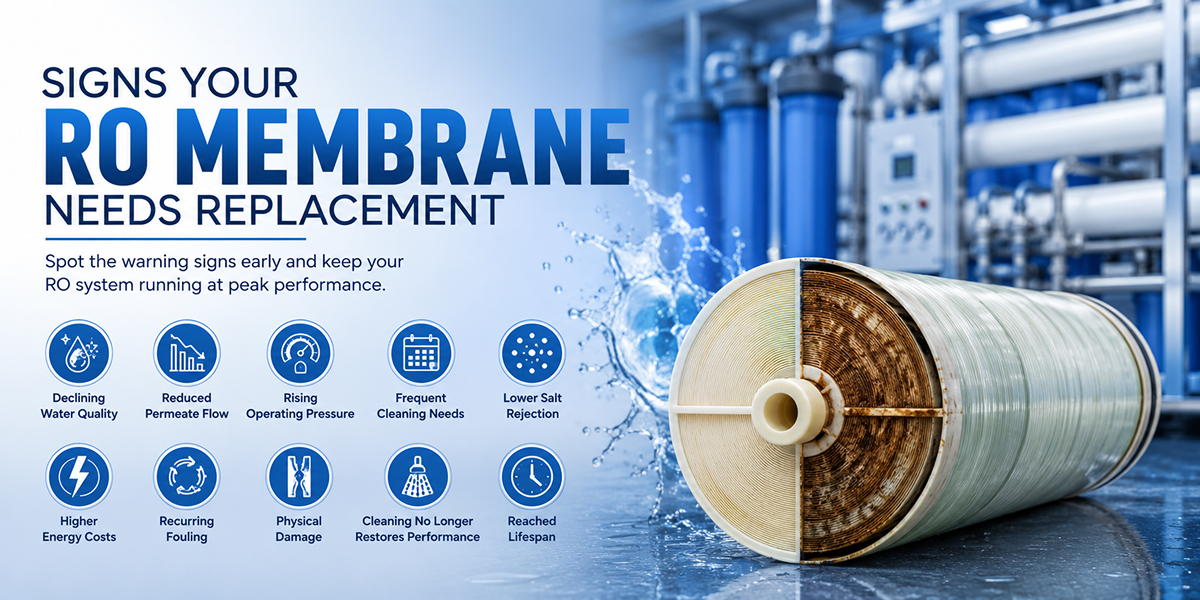
RO membranes degrade gradually rather than failing suddenly. Performance decline is usually detectable through routine monitoring well before the membrane reaches end of life. The following warning signs indicate that RO membrane replacement may be required:
- Declining permeate flow rate: A sustained drop in output at the same operating pressure indicates fouling or membrane degradation that cleaning cannot fully reverse
- Rising operating pressure: If the system requires progressively more pressure to maintain permeate output, the membrane resistance is increasing
- Deteriorating permeate water quality: An increase in TDS, conductivity, or specific contaminant levels in the permeate stream indicates a loss of salt rejection
- Increasing energy consumption: Higher pump energy use to compensate for reduced membrane performance
- Shortening cleaning intervals: If cleaning is required more frequently than the baseline established during commissioning, the membrane is likely approaching end of life
Identifying these signs early allows planned replacement to be scheduled, avoiding unplanned downtime and the associated production losses.
Related Article: Signs Your RO Membrane Needs Replacement
RO Membrane Cleaning and Maintenance
Routine RO membrane maintenance is the most reliable way to preserve performance and maximize operational life. A well-maintained membrane operating in suitable conditions will consistently outperform a neglected one regardless of initial membrane quality.
Continuous Performance Monitoring:
Track key metrics permeate flow, operating pressure, differential pressure, and permeate quality on an ongoing basis. Normalizing performance data against baseline readings at commissioning allows genuine performance changes to be distinguished from the effects of temperature and flow variation.
Scheduled Chemical Cleaning (CIP):
Clean-in-place (CIP) procedures use chemical solutions to remove foulants from the membrane surface without removing the membrane from the system. Cleaning agents are selected based on the fouling type:
- Alkaline cleaners (high pH) for organic fouling and biofouling
- Acid cleaners (low pH) for scaling and mineral deposits
Cleaning should be scheduled proactively based on normalized performance trends, not only when performance has significantly deteriorated.
Antiscalant Dosing:
Antiscalants are chemical inhibitors that dose into the feed water upstream of the membrane to prevent mineral scale formation. Correct antiscalant selection and dose rate are critical for systems treating hard or high-TDS water. Under-dosing leads to scaling; over-dosing can cause organic fouling in some systems.
Chlorine Management:
For TFC membranes, chlorine must be completely removed from feed water before it reaches the membrane. Activated carbon filtration or sodium metabisulfite (SMBS) dosing are the two most common dichlorination methods. Chlorine exposure even brief and at low concentrations causes irreversible oxidation of the polyamide barrier layer.
Pretreatment System Servicing:
Pretreatment components sediment filters, carbon filters, softeners, UV disinfection units, and dosing systems should be inspected and serviced regularly. A failure in any pretreatment component can quickly translate into membrane fouling or damage.
Related Article: RO Membrane Cleaning vs. Replacement — How to Decide
How to Extend RO Membrane Life:
With the right operational practices in place, most industrial RO membranes can perform reliably for 3 to 5 years. In well-managed systems with high-quality water feed, service lives beyond this range are achievable.
- Invest in effective pretreatment: The quality of pretreatment has a greater impact on membrane life than almost any other operational factor. Properly pretreated water reduces fouling rates and cleaning frequency.
- Monitor system performance consistently: Use normalized performance data to detect early fouling trends before they cause significant membrane damage or production losses.
- Follow a proactive maintenance schedule: Do not wait for performance to deteriorate before cleaning. Scheduled CIP procedures based on operating hours or performance triggers are more effective than reactive cleaning.
- Manage recovery rates carefully: Operate within the recommended recovery range for your feed water chemistry. Excessive recovery accelerates scaling and increases operating costs over time.
- Use compatible, quality-approved chemicals: Always use antiscalants and cleaning chemicals that are compatible with your specific membrane type and approved by the membrane manufacturer.
- Adhere to manufacturer operating guidelines: Operating within specified pressure, temperature, and pH limits protects the membrane from avoidable physical and chemical degradation.
Popular RO Membrane Brands
Several manufacturers have established a strong reputation for consistent quality and performance in industrial water treatment applications. The most widely used brands in the UAE, GCC, and global markets include:
- FilmTec™ (DuPont): One of the most globally recognized membrane brands, offering a comprehensive product range for brackish water, seawater, and specialty applications
- Hydranautics™ (Nitto): Well-regarded for high-performance seawater and low-energy membrane solutions
- LG Chem™: Known for high-productivity membranes with a competitive combination of performance and value
- Toray™: An established manufacturer with a strong presence in desalination and large-scale industrial projects
- Vontron™: A practical option for cost-sensitive industrial applications requiring reliable performance
The most suitable brand for your application depends on feed water conditions, required rejection rates, system design, and budget. Consulting with a specialist before selecting a membrane is always advisable.
How to Choose the Right RO Membrane
Selecting the wrong membrane for an application results in poor performance, higher operating costs, and shortened service life. The following evaluation criteria should guide every industrial RO membrane selection decision.
Feed Water Analysis:
Conduct a comprehensive water quality analysis covering TDS, hardness, pH, turbidity, organic content, iron, silica, and biological activity. This data is the foundation of every other selection decision and should be obtained before any membrane or system specification is finalized.
Required Permeate Quality:
Define the water quality targets clearly in terms of TDS limits, specific ion rejection, or regulatory standards applicable to your industry. Select a membrane specification that can reliably meet these targets under your expected operating conditions.
Operating Pressure and Energy:
Match the membrane’s pressure requirements to your pump capacity and energy budget. Brackish water membranes operate at significantly lower pressures than seawater membranes, which has a direct impact on energy consumption and operating costs.
Recovery Rate Targets:
Higher recovery rates reduce feeding water and wastewater volumes, lowering costs. However, recovery must be balanced against feed water chemistry to avoid scaling. Target recovery rates should be determined as part of system design, not adjusted arbitrarily after installation.
System Capacity Requirements:
Select membrane size and quantity to meet required permeate output while operating within the system’s hydraulic and pressure design parameters.
Regulatory and Application-Specific Requirements:
Pharmaceutical water, food-grade process water, and certain municipal applications require membranes that comply with specific regulatory standards or hold certifications. Confirm compliance requirements before finalizing membrane selection.
The right membrane specification translates directly into better system performance, lower total cost of ownership, and longer membrane service life.
Why Choose Aqua Flair for RO Membranes in the UAE and GCC?
Selecting a reliable supply partner for industrial RO membranes matters as much as selecting the right membrane itself. Aqua Flair Trading LLC supplies high-quality RO membranes and water treatment equipment across the UAE and GCC, supporting businesses that require dependable products, technical knowledge, and responsive local service.
Local Expertise Backed by Regional Experience
Aqua Flair understands the specific water treatment challenges faced by industries operating in the UAE and GCC region including high ambient temperatures, hard and high-TDS groundwater, and the heavy reliance on desalinated water across many sectors. This regional knowledge informs every product recommendation we make.
Quality Products from Trusted Manufacturers
We supply industrial RO membranes from globally recognized manufacturers, including FilmTec™, Hydranautics™, LG Chem™, Toray™, and Vontron™ ensuring that our customers have access to proven, high-performance membrane solutions for every type of application.
Sectors We Support
Aqua Flair serves a broad range of industries across the UAE and GCC, including:
- Manufacturing industries process water and boiler feed water treatment
- Food and beverage facilities ingredient water and process water systems
- Hotels and hospitality projects building water treatment for large commercial properties
- Healthcare facilities purified water for hospitals, clinics, and laboratories
- Commercial and municipal water treatment large-scale water purification systems
Frequently Asked Questions
How long do industrial RO membranes typically last?
Most industrial RO membranes last between 3 and 5 years under normal operating conditions. Systems with effective pretreatment and a consistent maintenance program often achieve longer service lives. Systems operating with poor feed water quality or inadequate maintenance typically see shorter membrane lifespans.
Can RO membranes be cleaned rather than replaced?
Yes. Chemical cleaning (CIP) can restore membrane performance when fouling is the primary cause of decline. However, if the membrane has suffered physical damage or irreversible chemical degradation such as chlorine oxidation of a TFC membrane cleaning will not restore performance and replacement is necessary.
What causes RO membrane fouling?
The four main fouling types are scaling (mineral deposits), biofouling (bacterial biofilm growth), organic fouling (natural organic matter accumulation), and colloidal fouling (fine particle deposition). Each type requires a different prevention strategy and cleaning approach.
How often should RO membranes be replaced?
There is no fixed replacement interval that applies universally. Replacement timing depends on feed water quality, operating conditions, maintenance history, and actual performance data. Normalized permeate flow and salt rejection trends are the most reliable indicators of when replacement is needed.
What is the difference between BW and SW membranes?
Brackish water (BW) membranes are designed for low-to-moderate salinity feed water and operate at lower pressures. Seawater (SW) membranes are engineered for ocean water and other high-salinity sources, requiring significantly higher operating pressure but delivering superior salt rejection rates.
Are TFC membranes better than cellulose acetate membranes?
For most industrial water treatment applications, yes. TFC membranes offer higher salt rejection, better permeate flow rates, and a longer service life. Their key limitation is chlorine sensitivity feed water must be dechlorinated before contact with a TFC membrane. Cellulose acetate membranes tolerate limited chlorine exposure but are considered legacy technology in most modern system designs.
Can RO membranes remove bacteria and viruses?
Yes. RO membranes are effective at removing bacteria, viruses, and other microorganisms due to their extremely small pore size. However, RO should not be relied upon as the sole barrier against biological contamination proper pretreatment and disinfection remain important components of a complete water treatment system.
What is the difference between 4040 and 8040 RO membranes?
4040 membranes (4″ × 40″) are used in smaller commercial systems and point-of-use applications. 8040 membranes (8″ × 40″) are the standard for large-scale industrial RO plants and deliver significantly higher permeate flow rates.
Conclusion
RO membranes are the most critical performance component in any industrial water treatment system. Their ability to reliably remove dissolved salts, contaminants, and microorganisms makes them indispensable across sectors ranging from food production and pharmaceuticals to desalination and manufacturing.
Getting the most from your membranes is not simply a matter of selecting the right product. Effective pretreatment, proper system design, ongoing performance monitoring, and a consistent maintenance program all work together to ensure reliable water output, extended membrane life, and lower total operating costs.
The supporting articles linked throughout go deeper on each specific topic from fouling types and cleaning protocols to membrane brand comparisons and replacement decision frameworks giving you the detailed information needed to manage your water treatment system with confidence.
For businesses operating in the UAE and GCC, Aqua Flair Trading LLC is here to support you with the right products, regional expertise, and technical guidance to keep your water treatment systems running at their best.
About the author : Aqua Flair

Aqua Flair Trading LLC is a UAE-based supplier of high-quality water treatment equipment, including RO systems, membranes, filters, vessels, and control valves for industrial and commercial applications